Connecting Eraring BESS through a “best for project” approach
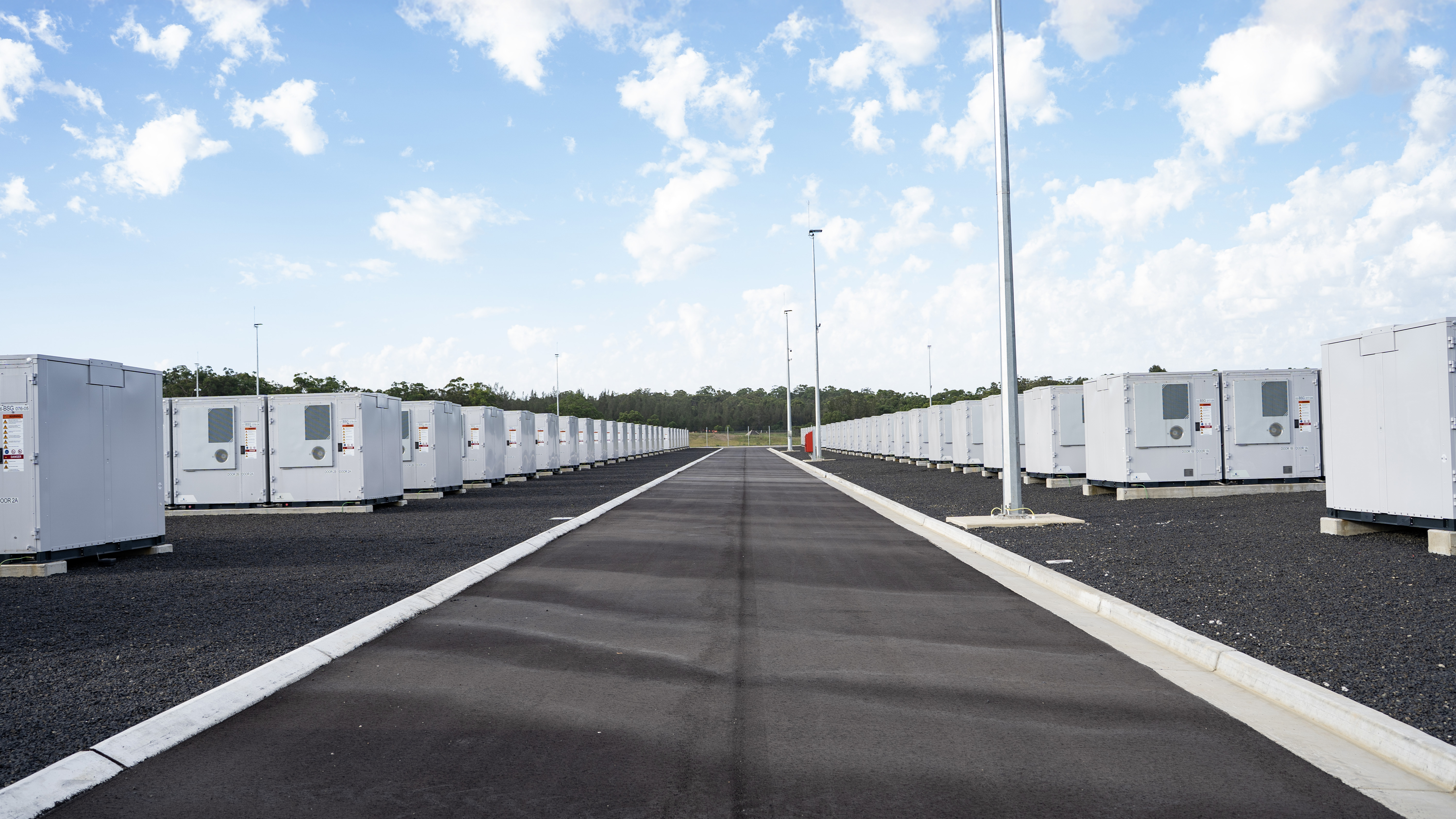
Origin Energy’s Eraring Battery Energy Storage System is one of the largest battery storage projects in Australia, designed to support grid reliability as part of the clean energy transition.
CASE STUDY - NOVEMBER 2025

CLIENT | LOCATION | SERVICE | PROJECT STATUS |
Origin | Lake Macquarie, NSW | Power Station | Completed |
Overview
Origin Energy’s Eraring Battery Energy Storage System is one of the largest battery storage projects in Australia, designed to deliver up to 700 MW of fast response capacity to support grid reliability as part of the clean energy transition.
The project is being built on land adjacent to the Eraring Power Station in New South Wales and comprises two separate facilities, one 460 MW and the other 240 MW, each requiring an individual grid connection through new substation infrastructure and a short 330 kV transmission link to Transgrid’s network.
Stage one of the Eraring BESS has already been energised, with the connection completed and final commissioning underway. It is expected to become fully operational in the coming months, while stage two is scheduled to come online in early 2027.
For Origin, this represents its first renewables and storage grid scale connection as part of its Energy Transition Strategy. It’s a complex project where meeting milestones on time has been critical to broader energy system planning.
Tim Hayes, Engineering Manager - Major Projects and Construction at Origin, led the project’s engineering team and has reflected on the primary challenges, the experience of working with Lumea, and the key lessons the business will carry into future projects.
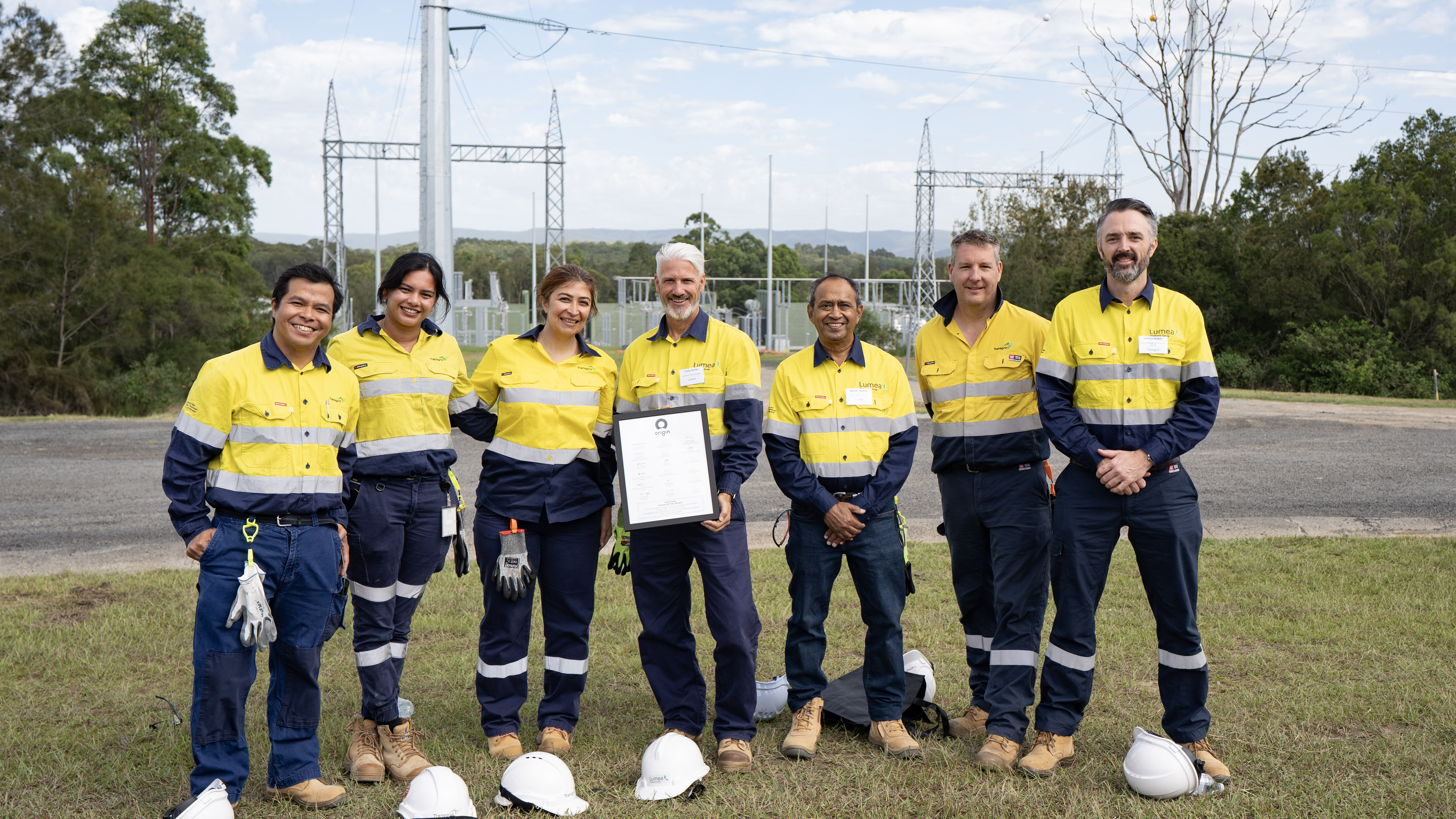
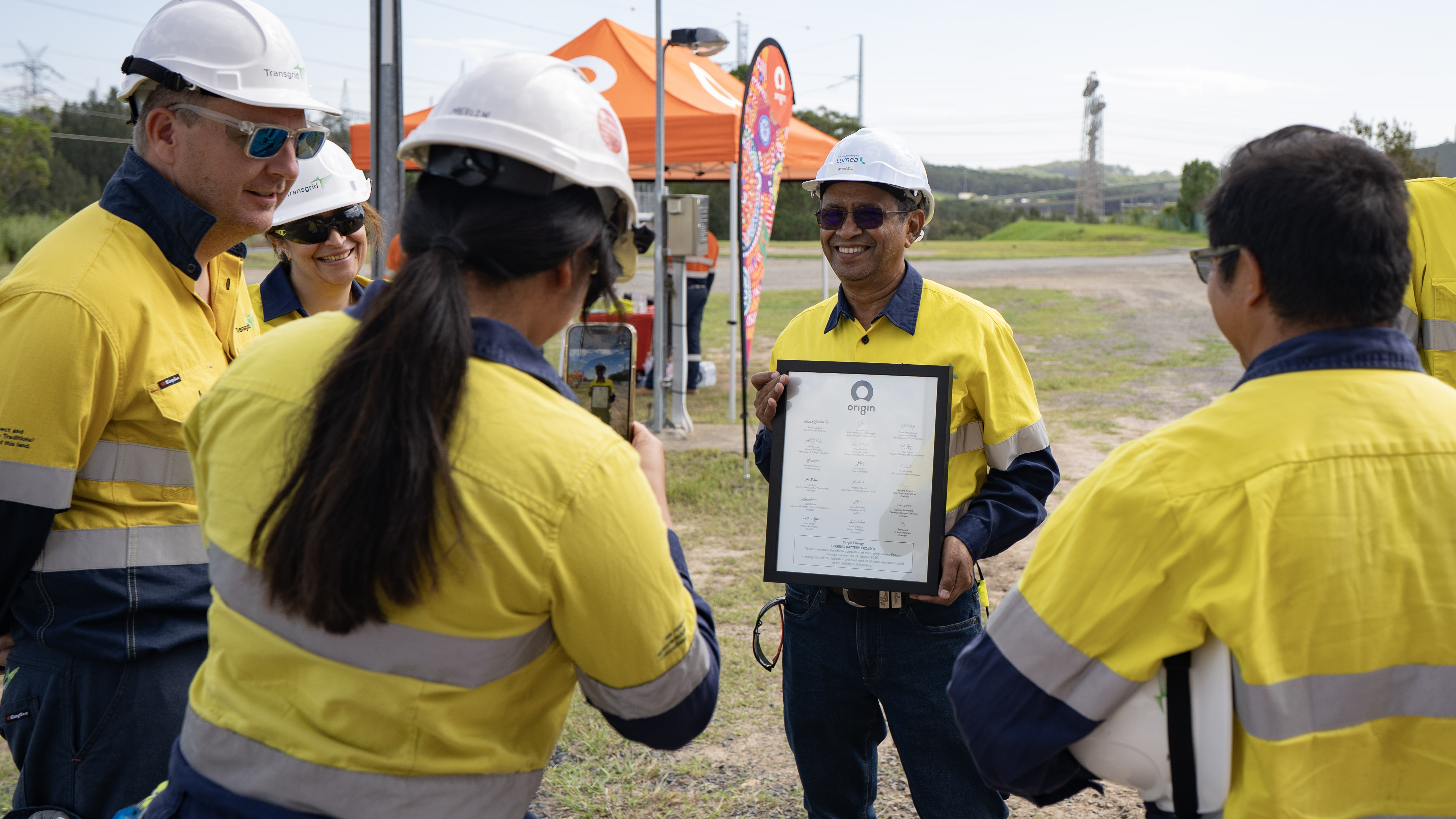
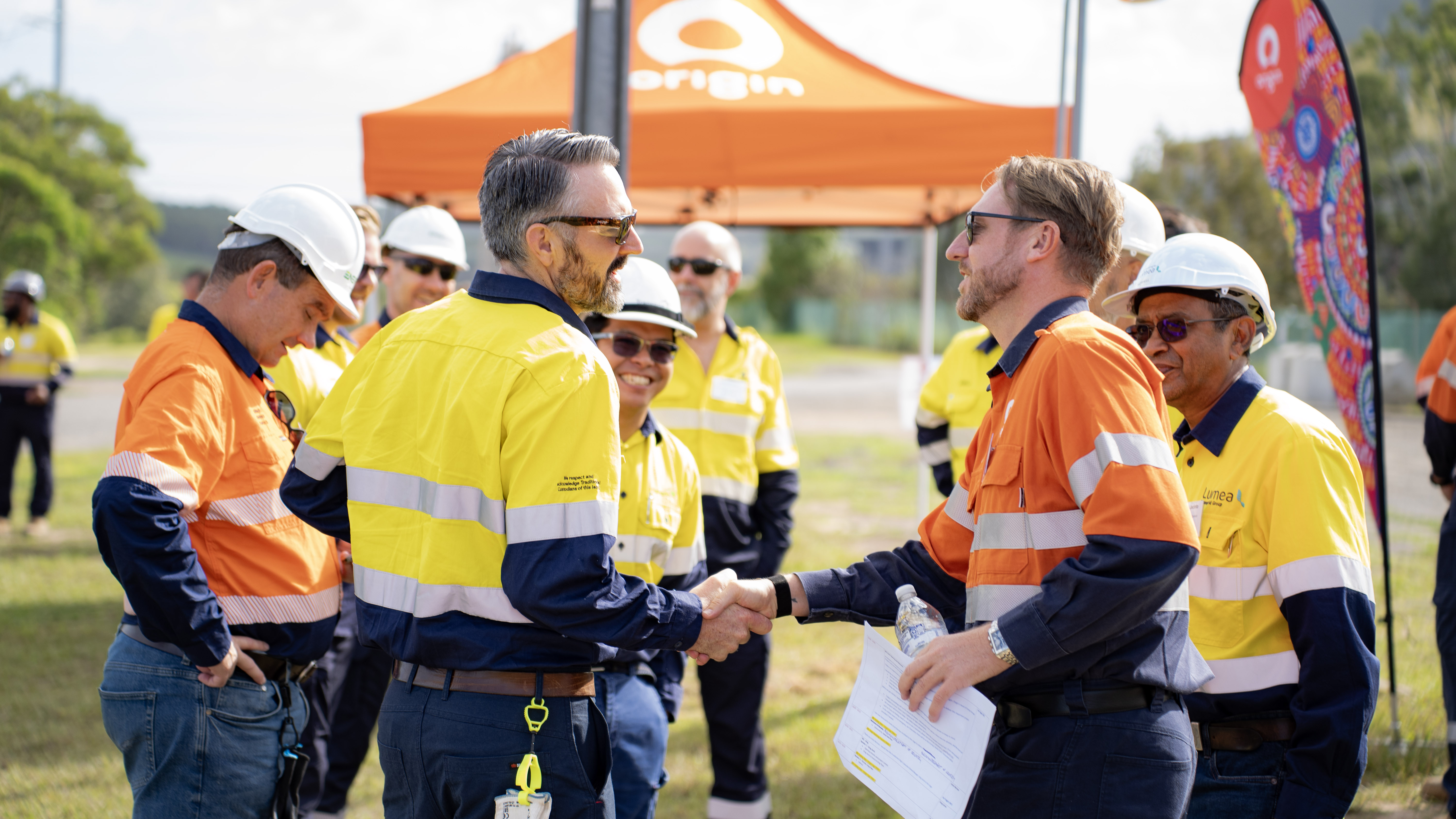
Central to that success, he says, was the culture fostered across all partners. “From the start, Origin, Transgrid, Lumea and Origin’s construction and equipment contractors (Enervenand Wartsila) agreed to operate as one team under a shared Project
Charter. We tried to build a culture that aligned on a common purpose and put the project first, not just the commercial outcome for each company. It didn’t feel like working with a contractor, it felt like working with a partner. There was trust and transparency, which meant issues could be raised early and resolved before they became big problems.”
Key Challenges
The four key challenges the project team needed to overcome were:
01
Complex dual connection requirements
Although the two batteries sit side by side, each required a separate connection point, adding design and coordination complexity.
02
Aggressive delivery schedule
Grid connections often face schedule risk, but the timeline left little margin for delay.
03
Navigating multiple stakeholders
Managing interfaces between Origin, Transgrid, AEMO, contractors and regulators required careful coordination.
04
Telecommunications delays
Late in the project, the planned fibre installation faced long delays that risked impacting commissioning communications.
It didn’t feel like working with a contractor, it felt like working with a partner. There was trust and transparency
Solutions

Simplifying a complex connection
Lumea worked with Origin to guide every step of the process, from connection application to energisation as an auxiliary load and hold point testing. This included helping Origin meet regulatory and technical requirements and ensuring early access to power to maintain battery health.
“The auxiliary load process sounds simple, but it’s actually a really complicated process involving input from multiple stakeholders. Lumea helped us tick off every requirement and get power to the site as soon as technically possible. That was critical because if we couldn’t get the chillers on, the batteries may have started degrading,” said Hayes.
By structuring the process into manageable milestones, Lumea kept the project on track with the team achieving energisation within schedule.

Navigating technical complexity
Lumea’s experience with Transgrid’s systems and standards proved essential. Acting as the key interface between Origin and Transgrid, Lumea helped manage agreements and technical documentation while keeping communication clear.
“Having Lumea help navigate stakeholders made things much easier, they understood who to speak to and how to keep momentum.

Integrated communications delivery
When the telco supplier's fibre works were delayed, Lumea stepped in with a complete alternate solution, designing and delivering an overhead communications link to meet the commissioning deadline via its ‘fibre in the sky’ Optical Ground Wire (OPGW).
“It wasn’t in the original scope, but it showed their flexibility and technical breadth. It worked brilliantly and kept the schedule on track.”

Learnings and impact
For Origin, the project demonstrated the value of partnership and collaboration.
“Connections are famously risky, but we managed to energise on schedule. I would describe Lumea less as a service provider and more as a coach. Having that expertise beside you takes away a lot of the uncertainty.”
A shared purpose, strong relationships, clear communication and a common “best for project” mindset were critical to success. The experience has set a benchmark for future projects proving even the most complex grid connections can be achieved efficiently when partners are aligned on outcomes.
“At the end of the day, we all wanted the same thing to get a safe, reliable connection on time and we did exactly that.”